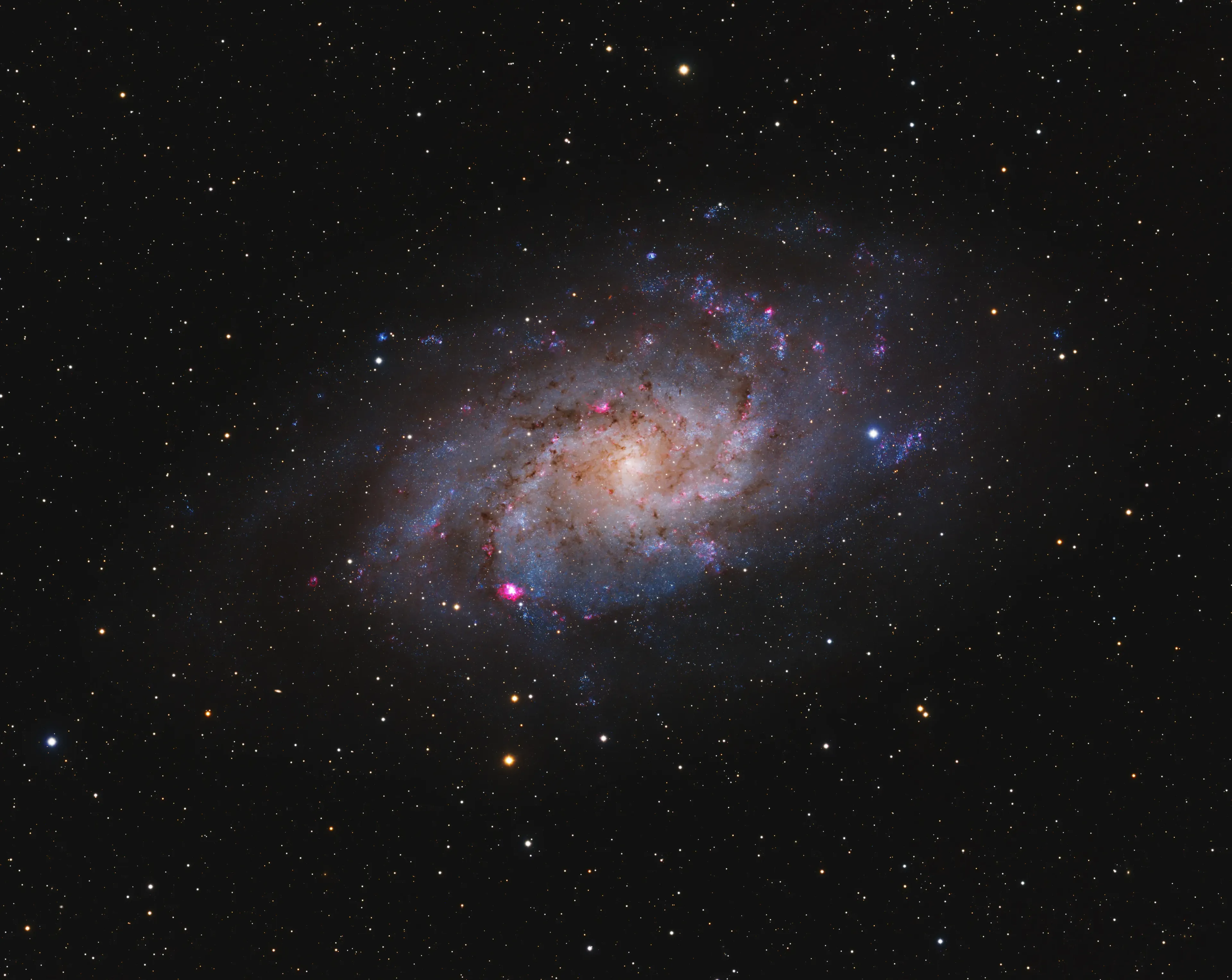
Look at the pink knots along the arms. Each one is a cloud of hydrogen lit by young stars, the same kind of object as the Orion Nebula or the Lagoon elsewhere in this gallery, except you’re seeing them from 2.7 million light-years instead of a few thousand. The brightest sits below and left of the core: NGC 604, one of the largest star-forming regions known anywhere, spanning something like 1,500 light-years. M33 lies almost face-on to us, which is why the spiral structure reads so clearly and why the whole galaxy looks softer and harder to spot than its brightness suggests. Third-largest member of the Local Group, after Andromeda and our own.