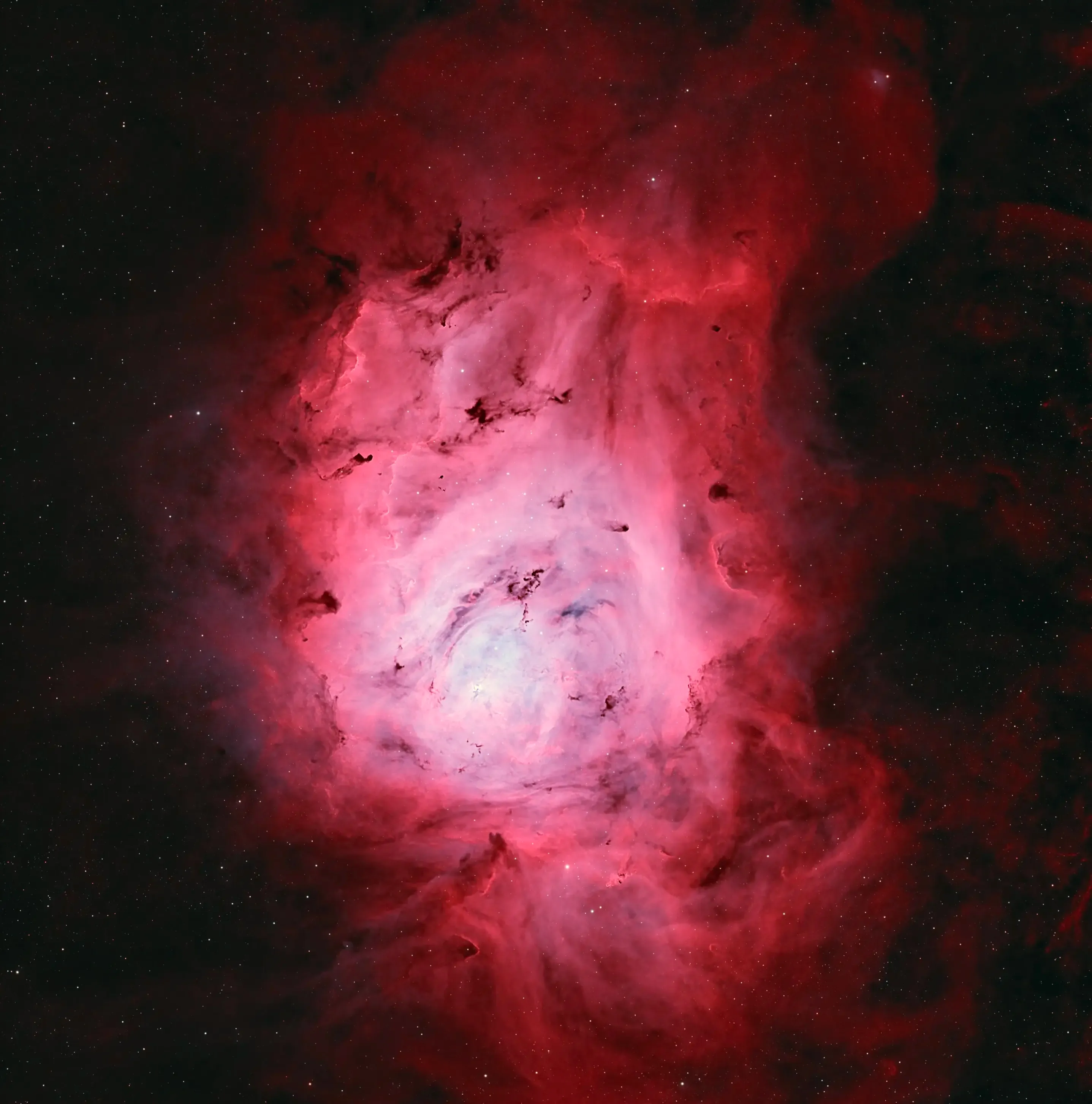
The dark lane cutting through the bright core is what gave this thing its name: nineteenth-century observers saw it as a lagoon dividing two glowing shores. It isn’t a gap. It’s cold dust sitting in front of the gas, blocking the light from behind. Most of that glow comes from one very hot young star, Herschel 36, sitting near the brightest part and ionising everything within reach. The small dark eggs scattered around the core are Bok globules, dense knots of dust and gas collapsing into stars that haven’t switched on yet. About 4,000 light-years away in Sagittarius, big enough and bright enough to spot without a telescope if your sky is dark.