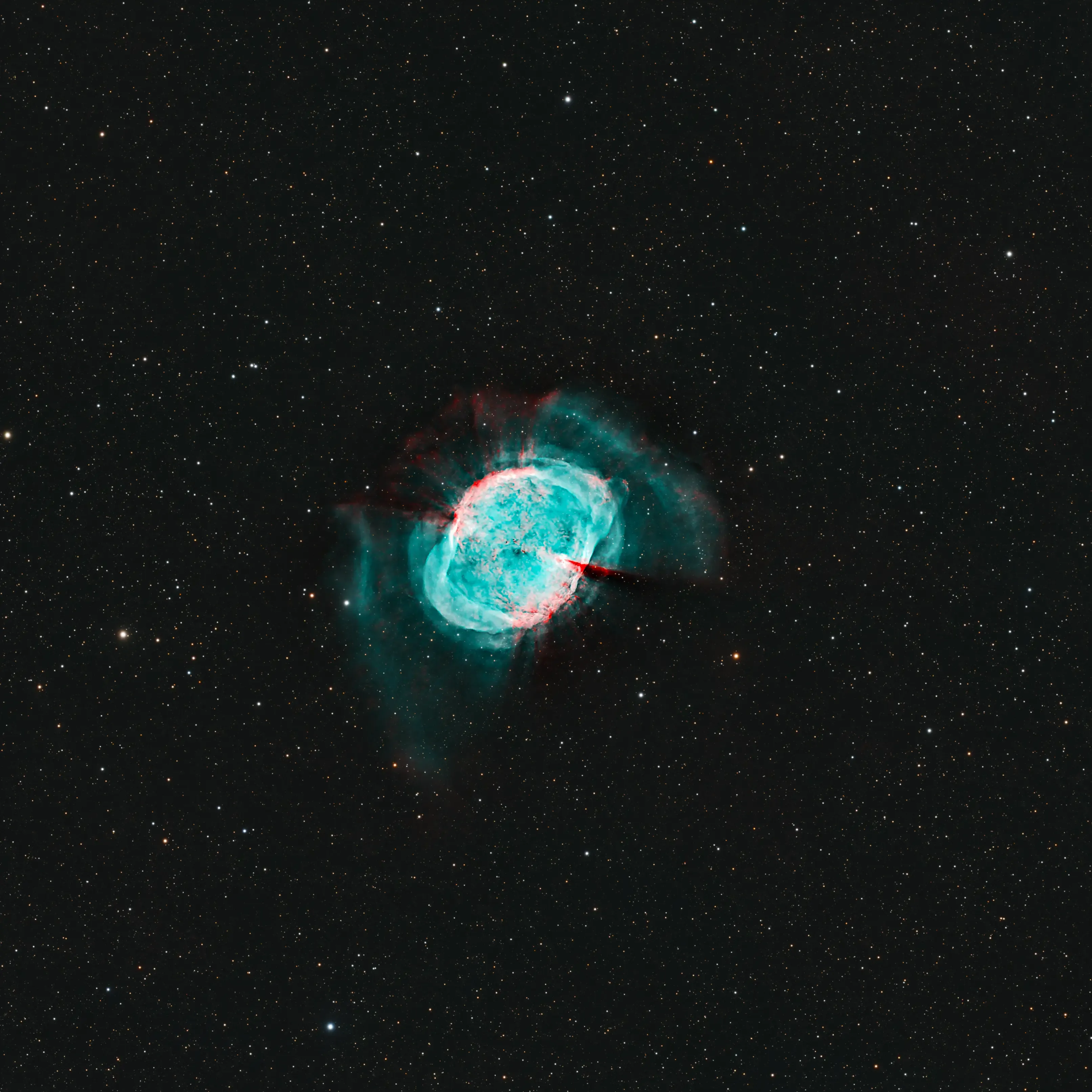
A dying star shed its outer layers and now lights them from the inside; the small white point at the centre is what’s left of it, a stellar core hot enough to make the whole shell fluoresce. Messier logged this in 1764 as the first planetary nebula ever recorded, a name that stuck even though there’s no planet involved: eighteenth-century observers just thought the little disc looked like one. The bright green-blue body is oxygen; the faint red reaching well beyond it, including the two spikes running out to either side, is hydrogen from material the star lost earlier, and it’s usually lost in the background of shorter exposures. About 1,200 light-years away in Vulpecula. The Sun will do something similar, though not for another five billion years.